
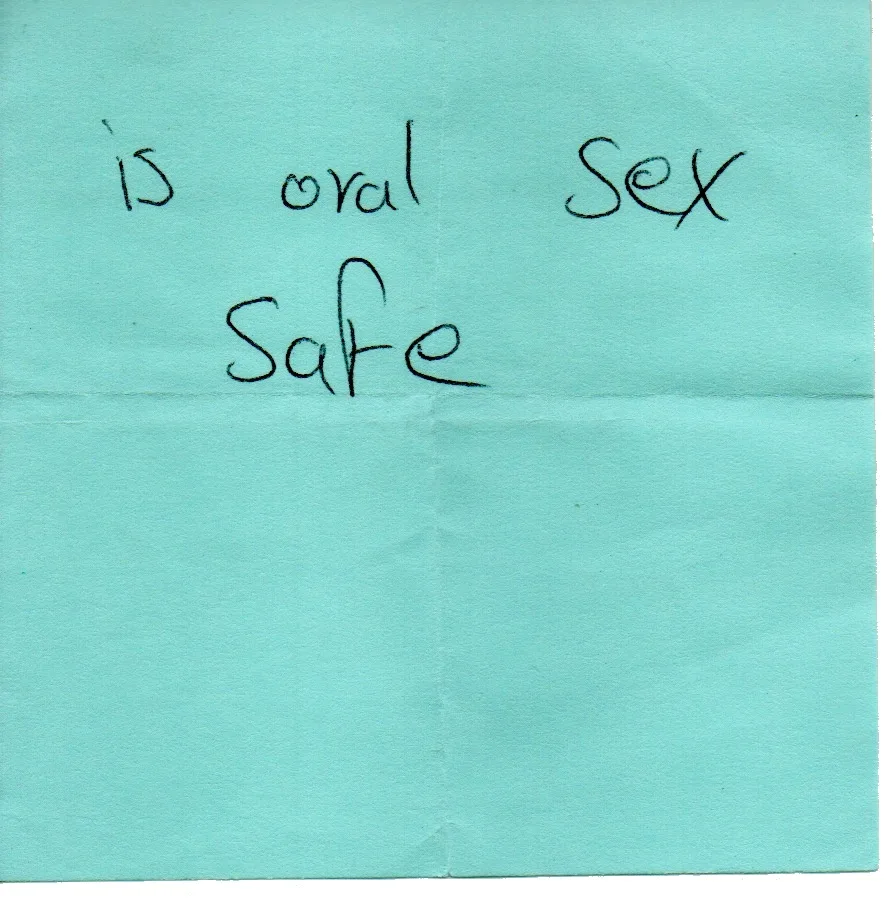
Is oral sex safe?
is lower risk than vaginal or , but it's not completely risk-free.
You can't get from oral sex. But you can catch from it. The most commonly transmitted ones through oral sex are (especially if someone has a ), , , , and . can also be transmitted through oral sex, though the risk is very low.
The risk is higher if there are cuts, sores, or bleeding gums in the mouth, or if the person giving oral sex has a throat infection.
Using a (for oral sex on a ) or a (for oral sex on a ) reduces the risk. Not everyone uses protection for oral sex, but it's worth knowing that the option exists.
is safer than vaginal or , but it is not completely safe.
You cannot get from oral sex. But you can catch some from it. The most common ones passed on through oral sex are , , and . on the mouth can give someone genital herpes through oral sex.
The risk is higher if there are cuts or sores in the mouth.
You can use a on a during oral sex, or a on a , to lower the risk. Not everyone uses these, but they do help.
Need to talk to someone?
- BrookSexual health, contraception, relationships, STIs. For under-25s.
- NHS Sexual HealthSexual health services, STI testing, contraception.
- ChildlineAny issue affecting under-19s. Abuse, bullying, mental health, relationships, sexual health.



Where to go from here
Three places this answer connects to — pick what you need next.
The book that answers the questions young people really ask — written for parents, carers and educators.
Buy the book →Curriculum guidance, lesson ideas and key terms to teach this topic with confidence.
See the topic hub →Expert-led delivery, training and curriculum planning from the team behind Okay to Ask.
See our services →