
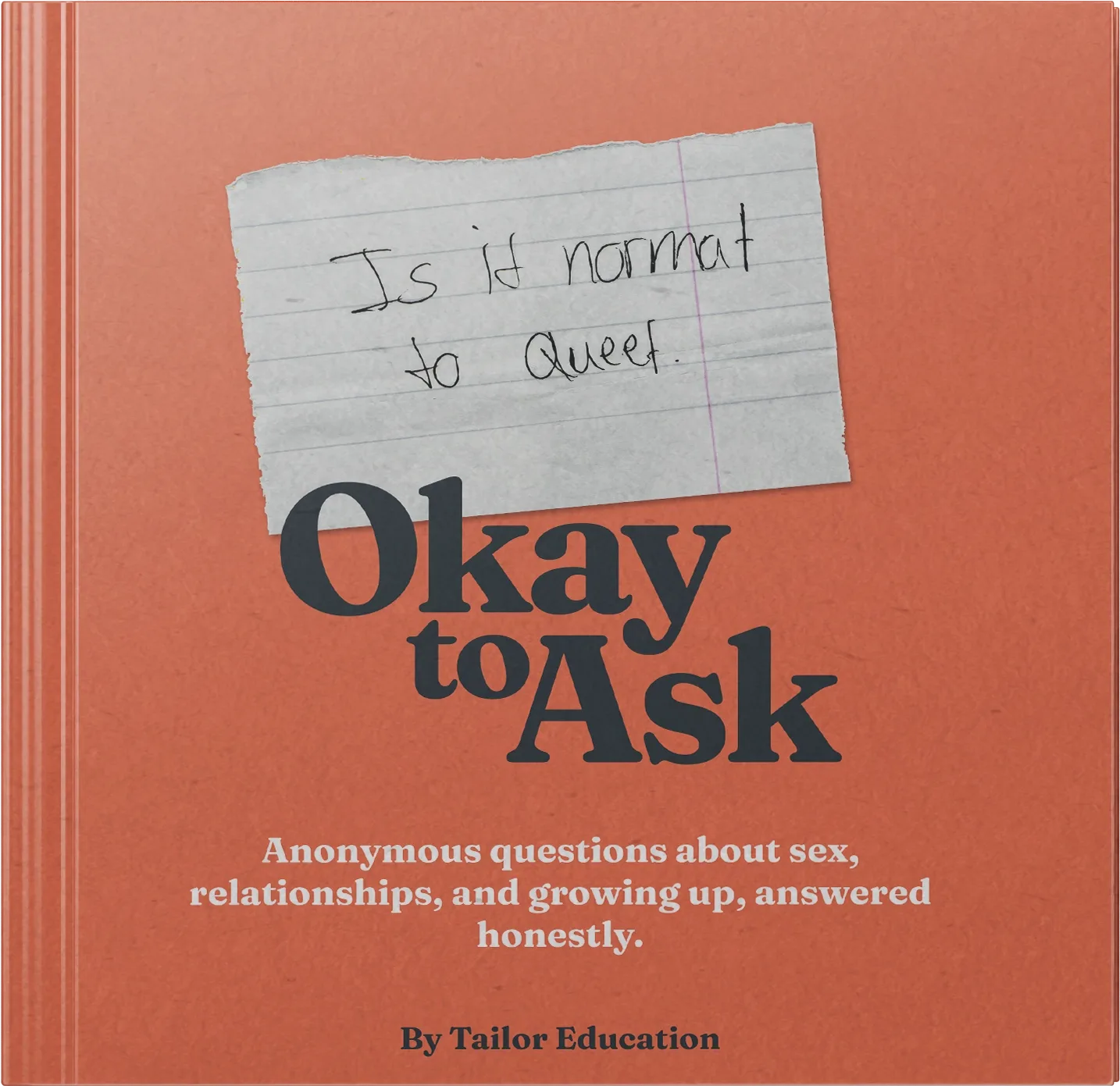
Real questions from real young people, answered honestly
152 anonymous questions written by young people in schools — each answered with honesty, care, and no judgement. Post-it notes and all.
Buy the book — £36.99What's inside
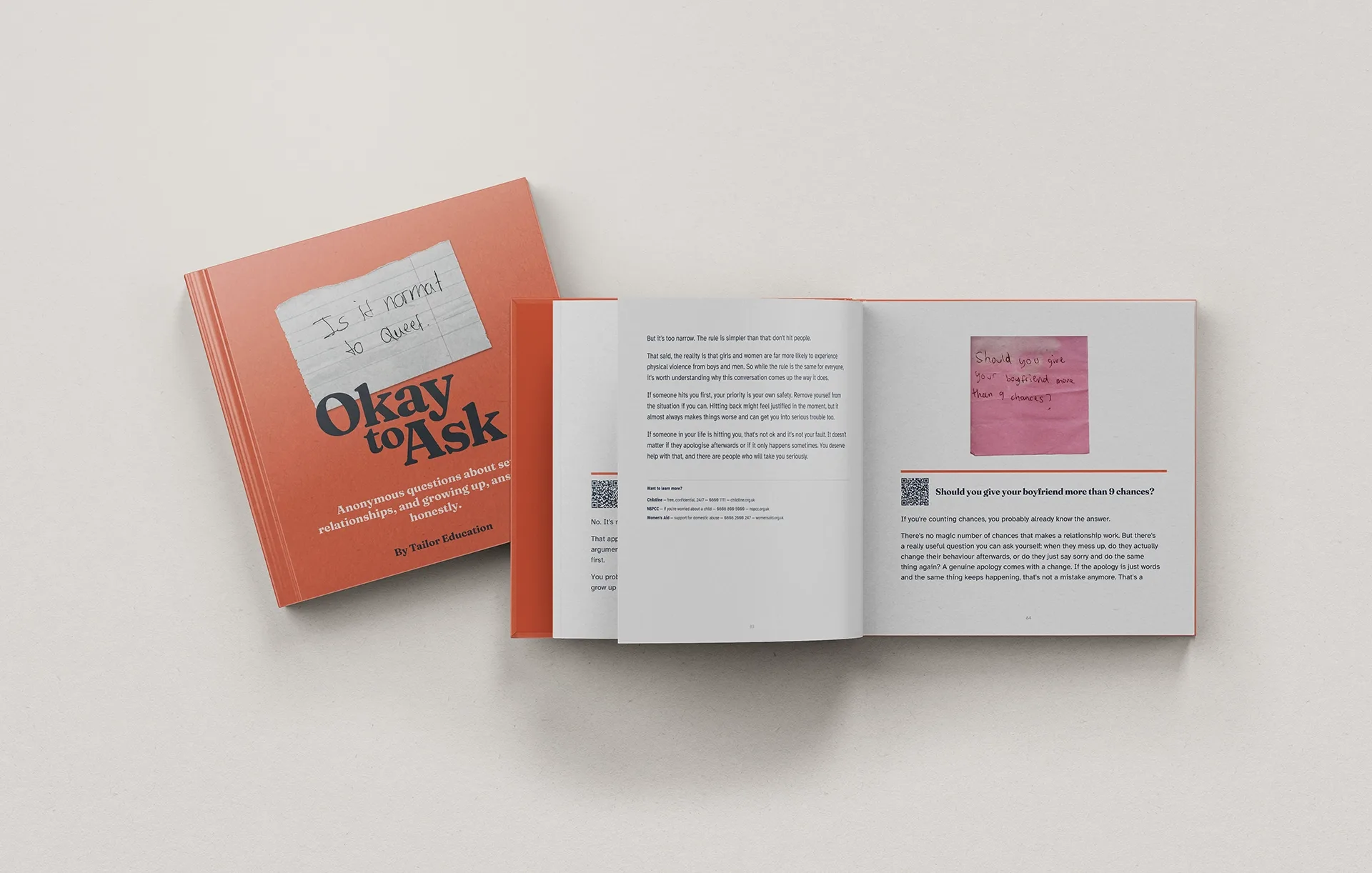
Over 150 real questions written anonymously by young people in schools — about relationships, sex, their bodies, and growing up. Each question comes with the original handwritten post-it note and an honest, expert-written answer.
No euphemisms, no evasion — just the answers young people actually want. The book covers consent, puberty, sexual health, identity, contraception, online safety, and everything in between.
Produced in a distinctive 210×210mm square format, the Okay to Ask book is designed to be picked up, flicked through, and left on a table for anyone who needs it.
Who is this book for?
For parents and carers
A conversation starter for home. See the questions young people are really asking, and how to answer them.
For schools
A reference that's always on the shelf. Quick, honest answers for when students ask unexpected questions — in the staff room, the library, or the PSHE cupboard.
For young people
A book that treats them with respect. The questions they've always wanted to ask, answered without judgement.
For everyone
A coffee table book, a gift, a training resource. Designed to be picked up, flicked through, and left somewhere for anyone who needs it.
A taste of what's inside
Every question in the book is answered on this site too. Here are a few to try.
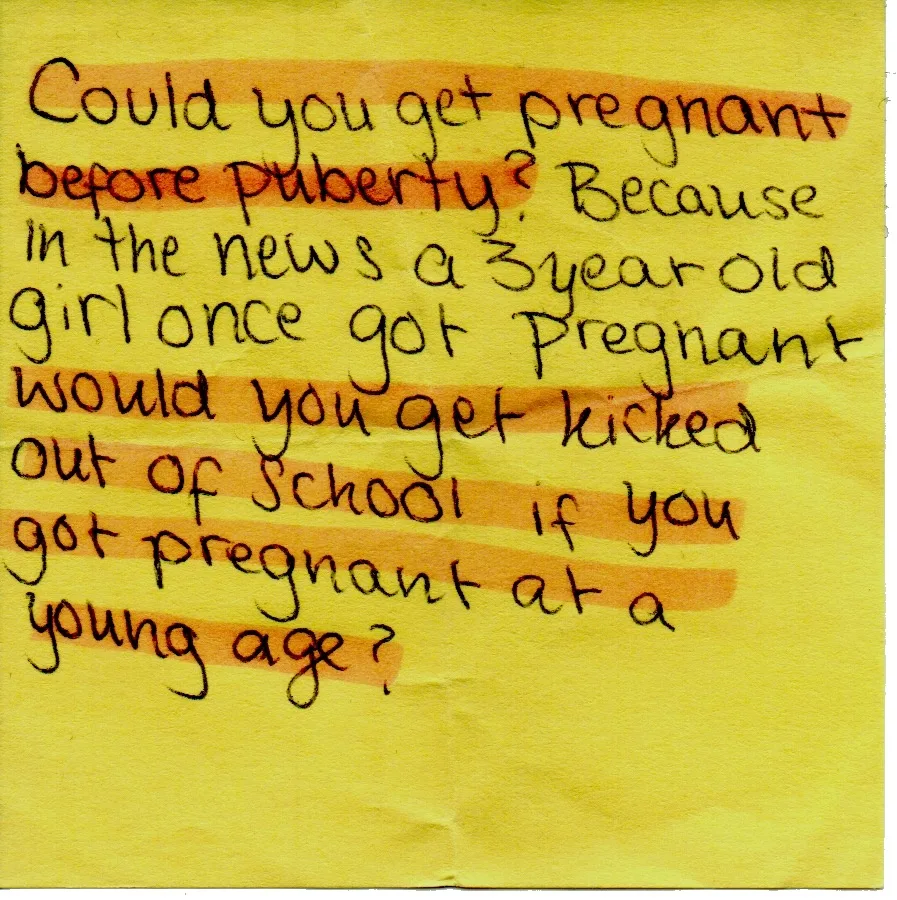
You cannot get pregnant before puberty starts. Pregnancy needs an egg, and your body does not release eggs until puberty begins. But there is an important detail. Your body releases its first egg about two weeks before your first period. That means you could get pregnant just before your first period arrives, without ever having had one. So before puberty, no. But once puberty is underway, pregnancy becomes possible even before your first period. If your body is showing signs of puberty like breast growth or body hair, it may already be able to get pregnant.
Read the full answer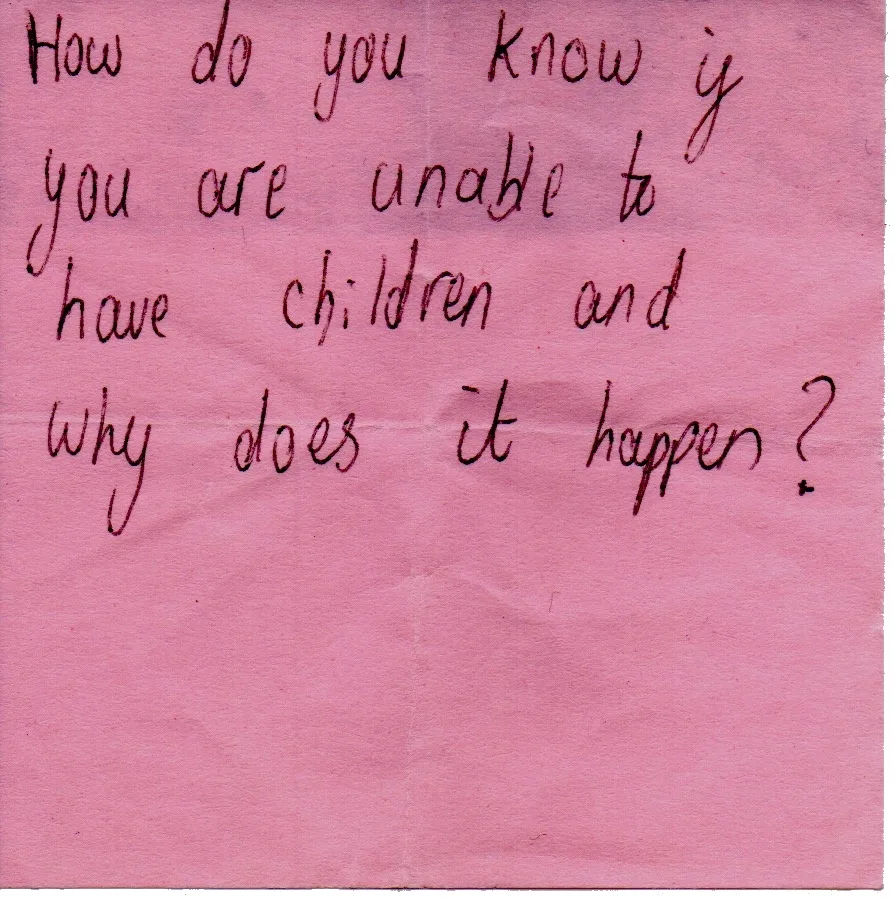
Most people do not know if they can have children until they try. There is usually no obvious sign beforehand. For girls and women, very irregular periods or no periods at all can sometimes mean the body is not releasing eggs regularly. Conditions like PCOS can affect this. For boys and men, fertility problems are usually about sperm, which can only be checked with a test. Untreated STIs like chlamydia can cause fertility problems if left for a long time. This is one reason getting tested matters. If you are a teenager worrying about this, you would not usually know at your age. If you have concerns, a GP can help.
Read the full answer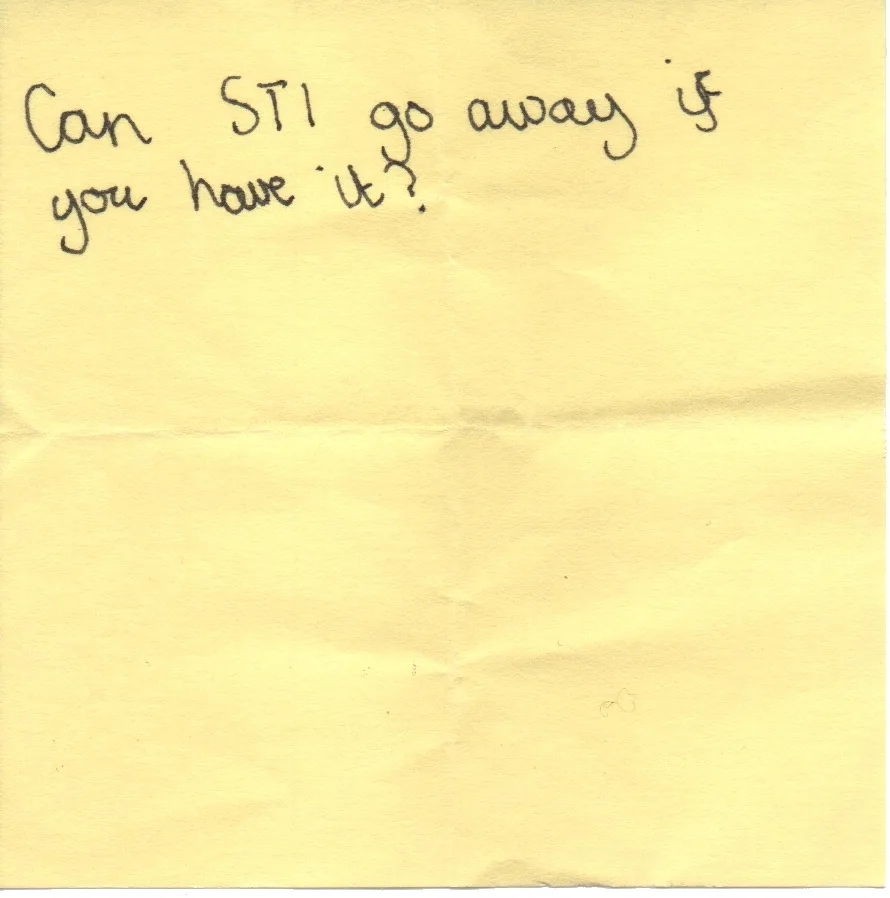
Some STIs can be cured and some can't. It depends on which one it is. STIs caused by bacteria, like chlamydia and gonorrhoea, can be cured with antibiotics. You take the medicine, and the infection goes away. STIs caused by viruses, like herpes and HIV, can't be cured. But they can be controlled with medicine. People with HIV take daily tablets and live normal, healthy lives. Herpes can be managed so outbreaks happen less often. The important thing is to get tested. Many STIs have no symptoms, so you might not know you have one. Testing is free and private at any sexual health clinic.
Read the full answerWritten and produced by the Tailor Education team. All content aligned to DfE statutory guidance and the PSHE Association framework.
About Tailor Education