
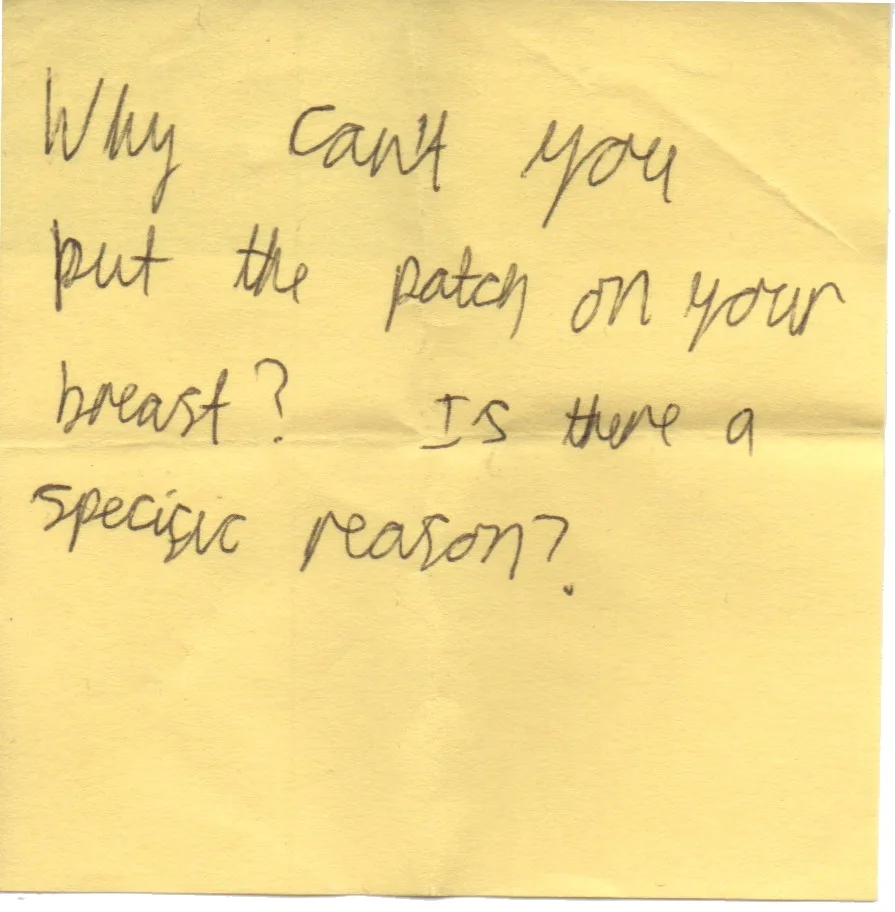
Why can't you put the patch on your breast?
The contraceptive shouldn't be placed on your breasts because the breast tissue can absorb the differently, which could affect how well the patch works or increase the risk of side effects.
The patch releases hormones ( and progestogen) through your skin into your bloodstream. For it to work properly, it needs to be on an area where the skin absorbs the hormones at a consistent rate. The recommended places are your stomach, upper outer arm, buttocks, or upper back. These areas have the right type of skin for the patch to work as intended.
Breast tissue is also more sensitive, so the patch could cause more irritation there. And breasts move more than other parts of the body, which makes the patch more likely to come off.
If you're using the patch, stick it to one of the recommended areas, on clean, dry skin, and change the position slightly each week to avoid irritation.
You should not put the contraceptive on your breasts because breast tissue takes in differently. This could stop the patch from working properly.
The patch releases hormones through your skin. For it to work well, it needs to be on skin that absorbs hormones at a steady rate. The best places are your stomach, upper arm, bum, or upper back.
Breast skin is also more sensitive, so the patch could cause more irritation there. And breasts move more, which makes the patch more likely to fall off.
Stick it on one of the recommended areas instead. Change the position slightly each week to avoid skin irritation.
Need to talk to someone?
- BrookSexual health, contraception, relationships, STIs. For under-25s.
- NHS Sexual HealthSexual health services, STI testing, contraception.
- ChildlineAny issue affecting under-19s. Abuse, bullying, mental health, relationships, sexual health.
Other questions young people ask
-
 Contraception & Pregnancy
Do you feel more open when the ring is in?
Read the answer -
 Puberty
Is having an erection a good thing?
Read the answer -
 Puberty
What is the average height for a teenage boy:girl?
Read the answer -
 Puberty
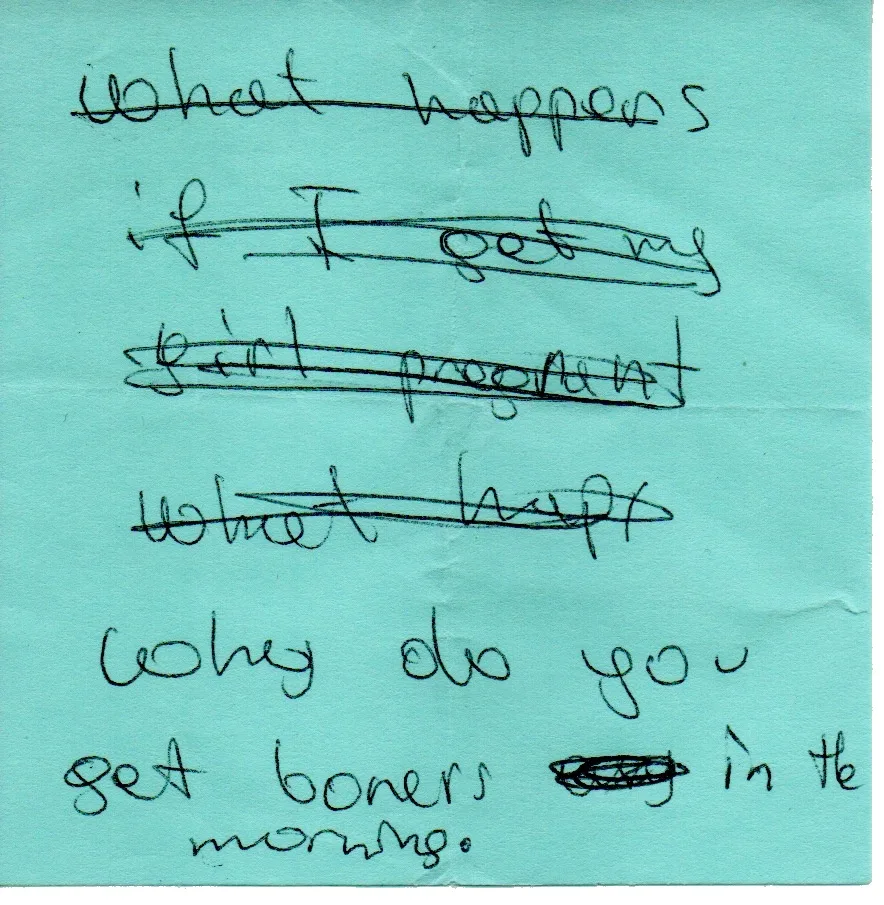
Why do you get boners in the morning?
Read the answer -
 Puberty
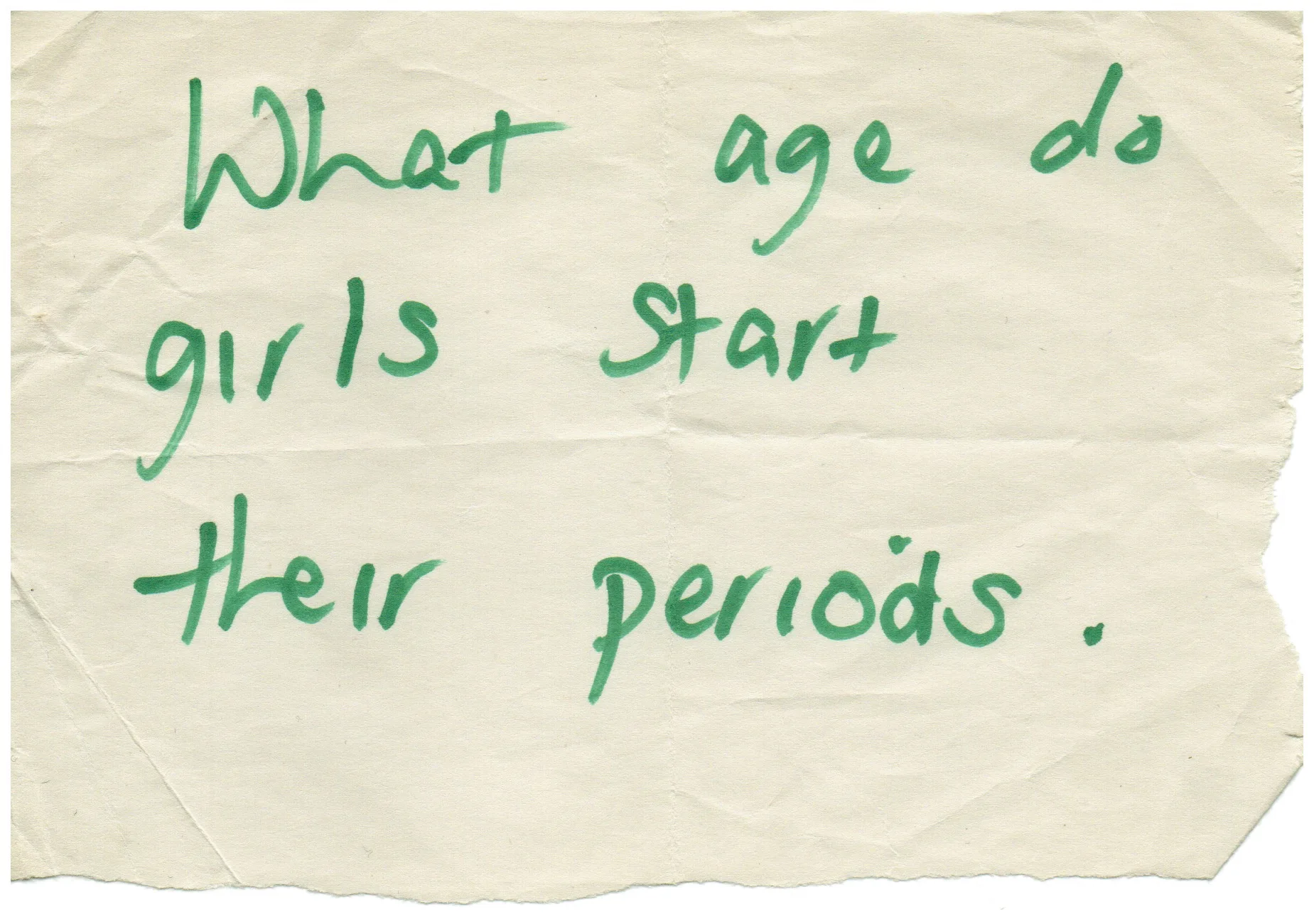
What age do girls start their periods?
Read the answer
Where to go from here
Three places this answer connects to — pick what you need next.
The book that answers the questions young people really ask — written for parents, carers and educators.
Buy the book →Curriculum guidance, lesson ideas and key terms to teach this topic with confidence.
See the topic hub →Expert-led delivery, training and curriculum planning from the team behind Okay to Ask.
See our services →