
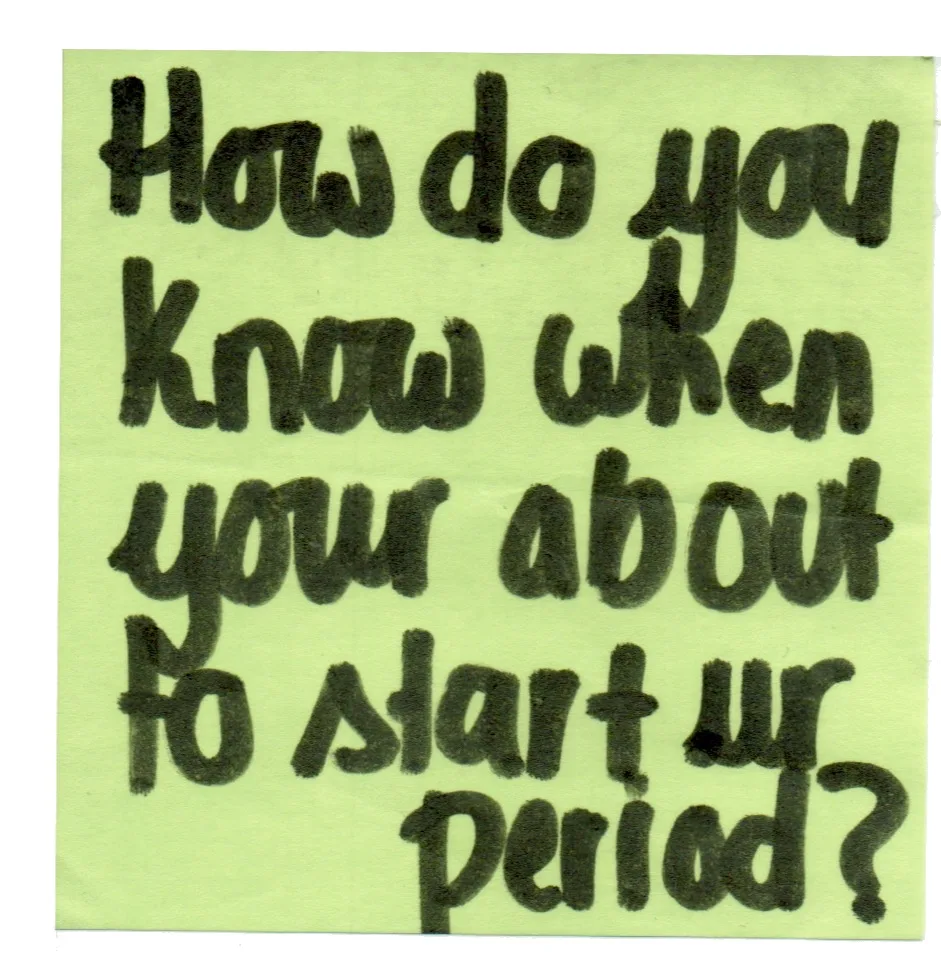
How do you know when you're about to start your period?
There's no way to know for sure when you're about to start your , but your body usually gives you some signs that it's on its way.
Most people get their first period somewhere between the ages of 9 and 16. It usually happens about two years after breasts start to develop, so if you've noticed changes there, your period might not be too far off.
Other signs that your period could be coming include growing taller (especially a noticeable ), hair growing under your arms and around your , and vaginal . Discharge is a clear or white fluid that you might notice in your underwear. It's completely normal and is actually one of the more reliable signs that your period is getting closer. Most people start getting discharge about 6 to 12 months before their first period.
When your period is very close (days rather than months), you might feel some cramping or aching in your lower stomach, feel more emotional or moody than usual, or notice your skin breaking out. But not everyone gets these signs, and your first period can also just arrive without much warning at all.
It's a good idea to keep a pad or liner in your bag so you're not caught off guard. If your period does start unexpectedly, most school toilets have supplies, and you can always ask a teacher, friend, or the school office. It's nothing to be embarrassed about.
There is no way to know exactly when your first will start. But your body usually gives some signs.
Most people get their first period between the ages of 9 and 16. It usually comes about two years after breasts start growing.
Other signs it might be on the way include growing taller, hair under your arms and around your , and a clear or white fluid in your underwear called . Discharge often starts about 6 to 12 months before your first period.
When it is very close, you might feel cramps in your lower tummy or feel more moody than usual. But sometimes it just arrives without warning.
Keeping a pad in your bag means you will not be caught out.
Need to talk to someone?
- BrookSexual health, contraception, relationships, STIs. For under-25s.
- ChildlineAny issue affecting under-19s. Abuse, bullying, mental health, relationships, sexual health.
Other questions young people ask
-
 Puberty
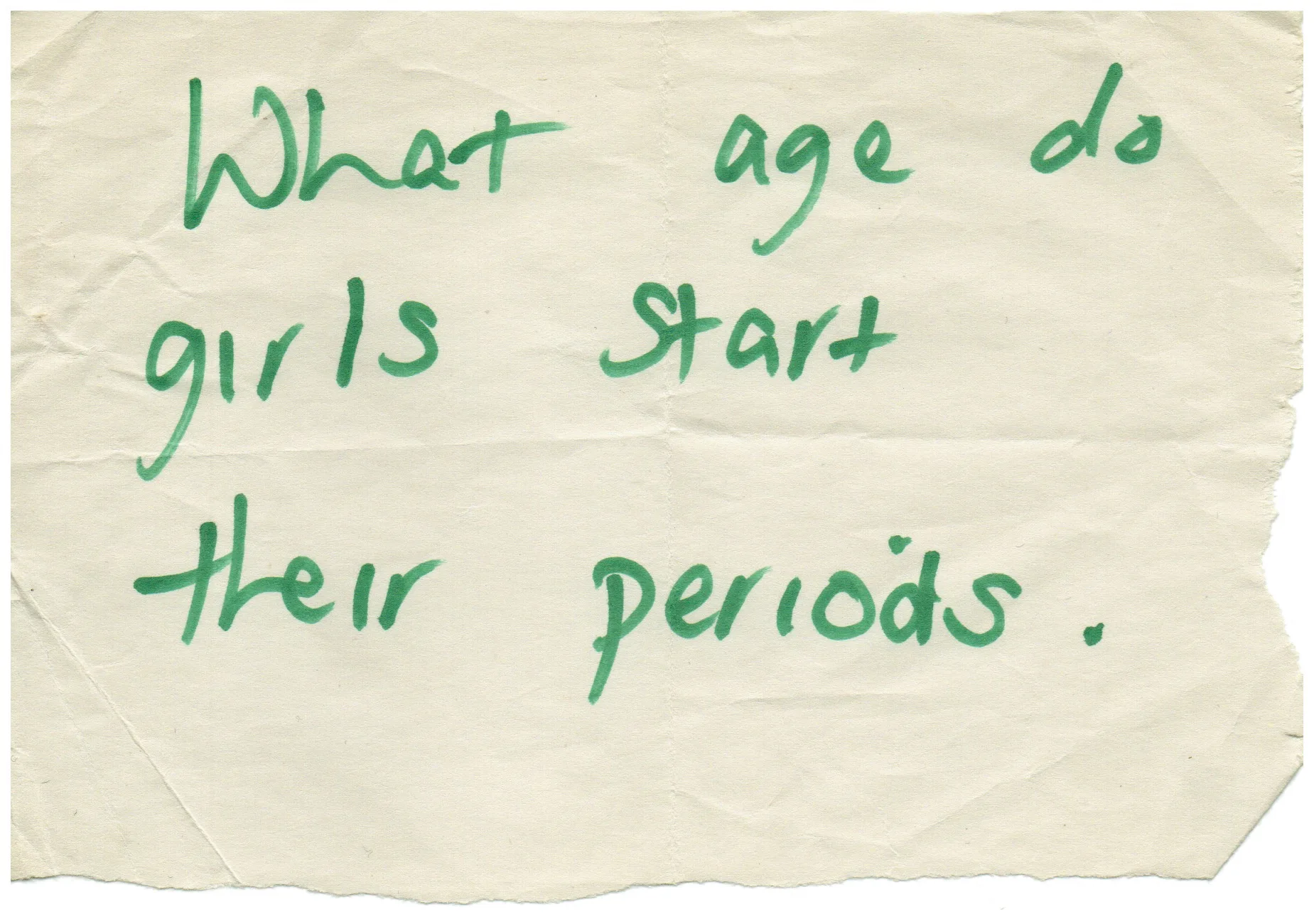
What age do girls start their periods?
Read the answer -
 Contraception & Pregnancy
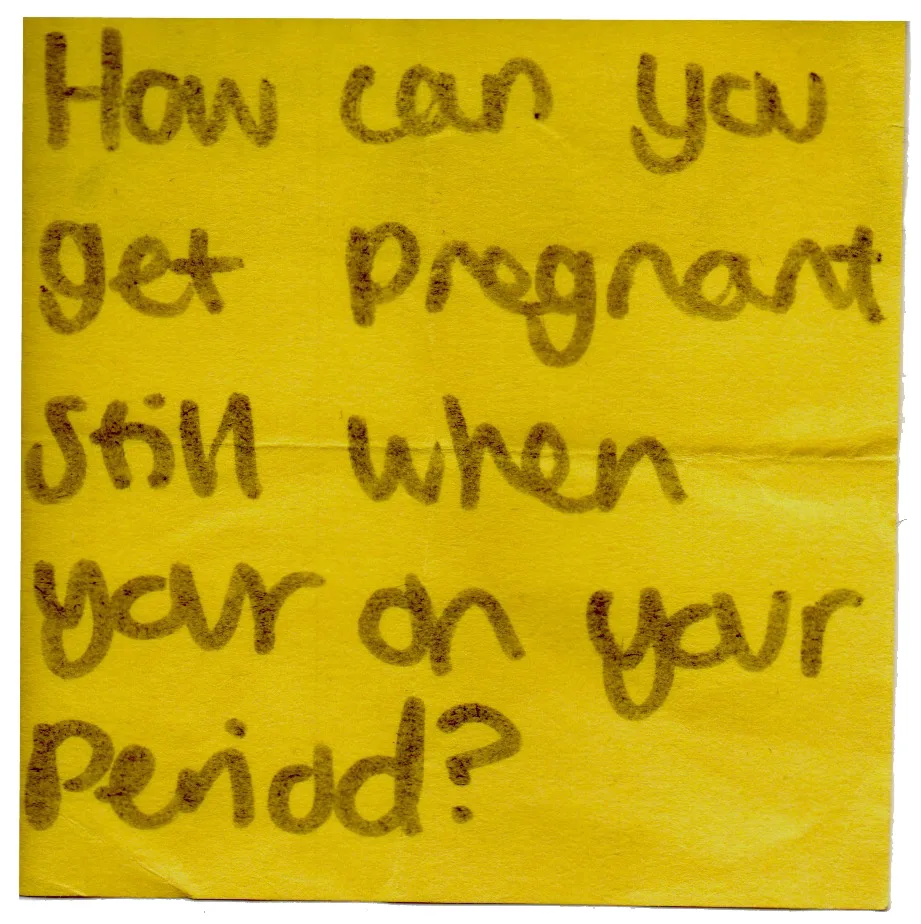
How can you get pregnant still when you're on your period?
Read the answer -
 Puberty
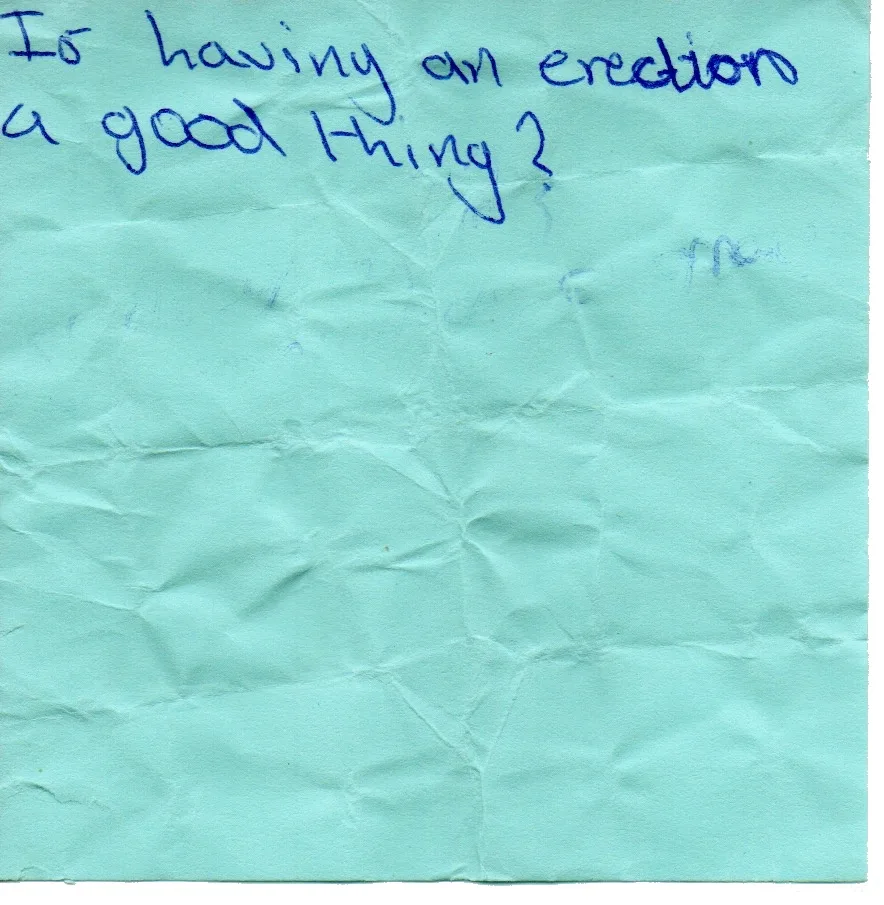
Is having an erection a good thing?
Read the answer -
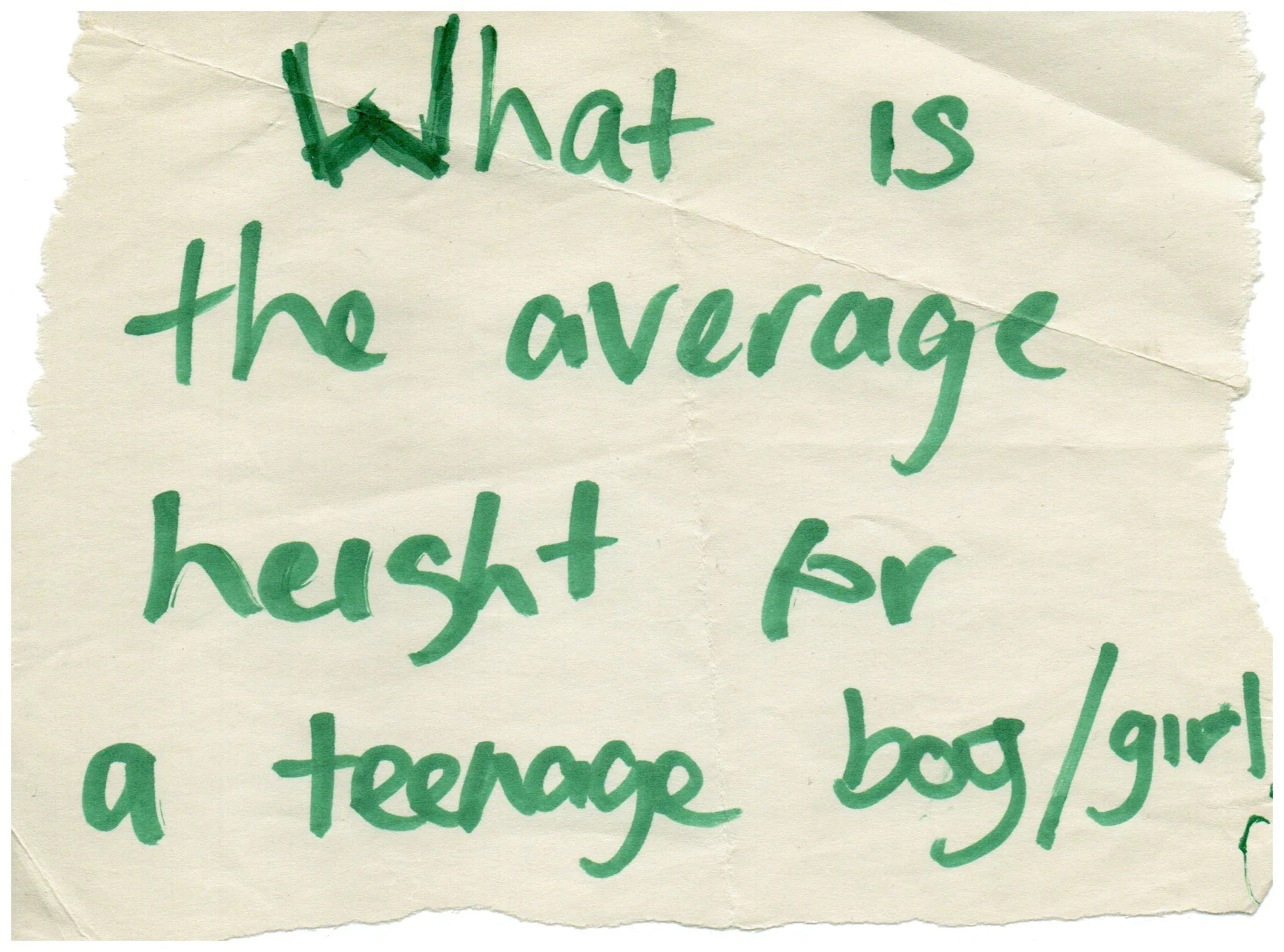 Puberty
What is the average height for a teenage boy:girl?
Read the answer -
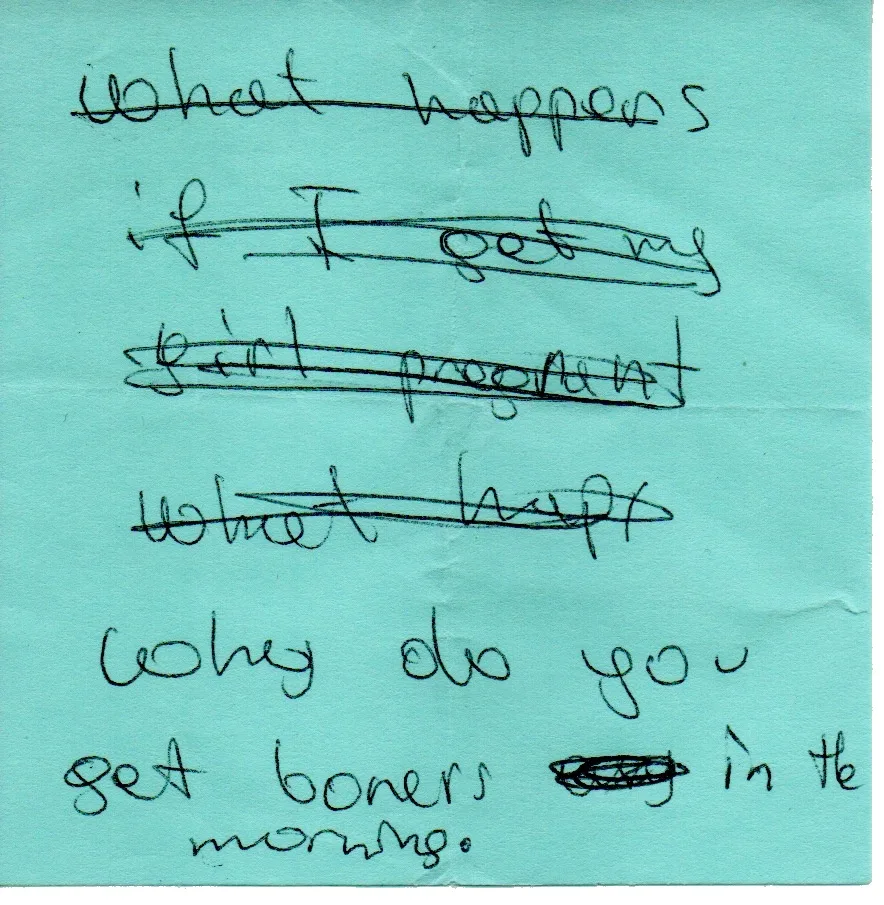 Puberty
Why do you get boners in the morning?
Read the answer
Where to go from here
Three places this answer connects to — pick what you need next.
The book that answers the questions young people really ask — written for parents, carers and educators.
Buy the book →Curriculum guidance, lesson ideas and key terms to teach this topic with confidence.
See the topic hub →Expert-led delivery, training and curriculum planning from the team behind Okay to Ask.
See our services →