
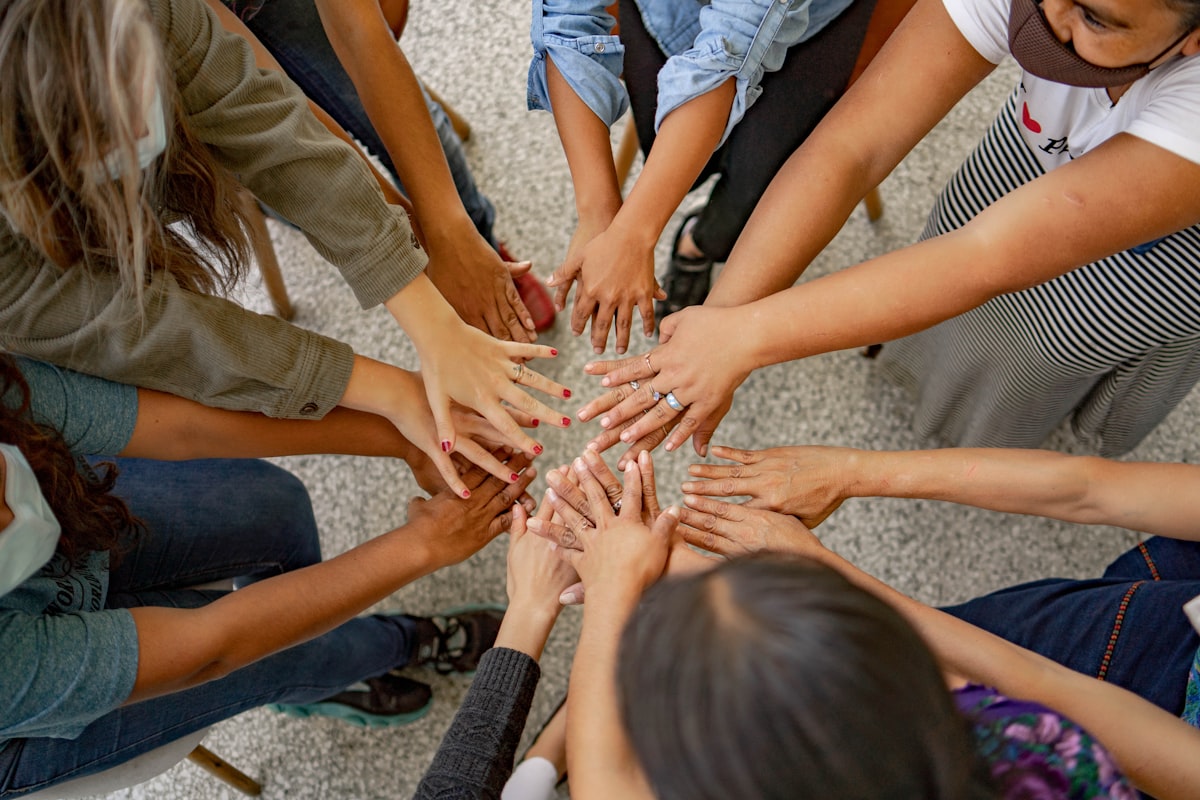
Tuesday Nights in Angel: Running RSE with the Red Cross Youth Group
Every Tuesday evening, the British Red Cross runs a youth group at its office near Angel. It's called the Refugees and Befriending Project — R'n'B, if you're in the building — a peer-led space for young unaccompanied refugees and asylum seekers in London, aged roughly fourteen to twenty-one.
I've spent a lot of time in that room, running the sex and relationships strand of the work. Which, written down like that, sounds simple. In practice it's one of the most humbling rooms I've ever worked in.
Who was in the room
Some of the young people had been in the UK for a few months. Some for a few years. Most had arrived without parents or family. Some had been through formal schooling; some hadn't sat in a classroom for a very long time. They came from different countries, different first languages, different religions, and very different amounts of prior information about their own bodies.
The thing they had in common was that they were all trying to build a life here, mostly on their own, and that RSE had never really been designed with them in mind. The curriculum in schools assumes a young person who speaks the same language as their teachers, has some kind of stable housing, and has at least the bones of a family conversation to fall back on. Take those away and a lot of what passes for RSE stops fitting.
What the sessions looked like
Quite a lot of myth-busting. Some of it was what you'd expect — how actually work, what do and don't do, what looks like on the NHS. Some of it was bigger: what the law says about , where to go for free, confidential advice, who you can talk to if something has happened.
Underneath that was the relationships work. What a healthy relationship looks like. What coercion looks like. What you are and aren't allowed to be told you have to do. These are questions every young person has, but they land differently when someone has been moved through systems where adults have had a lot of power over them and they've had very little.
We did a lot of it slowly, in plain language, with a lot of space for "can you say that again." Sometimes we worked in small groups with a mix of first languages at each table so people could quietly translate for each other. Sometimes the youth workers who knew the group well would just sit alongside a particular young person and help them follow the thread. The format changed depending on who had turned up that week.
What I took away
Two things, mainly.
The first is how much ground an hour and a half can actually cover when the room is set up right. The Red Cross staff had done the hard work of making it a safe space well before I walked in. People knew each other. They trusted the youth workers. My job was to plug sensibly into that, not to try to build a room from scratch.
The second is that the gap between the RSE young people are supposed to get and the RSE some young people actually get is enormous. For quite a lot of the people I worked with, those Tuesday sessions were the first time they'd had basic, accurate, judgement-free information about their bodies — in English, in a country where most of that information is technically freely available. That's worth sitting with for a moment.
Schools can't do everything. But it's worth asking, in your own setting, which young people on your roll are most likely to be getting less than the rest — because of language, because of care status, because of what's happening at home — and what that means for how you pitch the work. A universal programme that leaves the same group behind every year isn't really universal.
If you work with young refugees and asylum seekers, or with any group of young people who sit outside the assumptions baked into most RSE schemes of work, and you'd like to talk through how to adapt what you're doing, get in touch.


Want help with direct RSE delivery?
Talk to us about how Tailor Education can support your school.
Get in touch